The Gap Between Romantic Ideals and Marital Reality
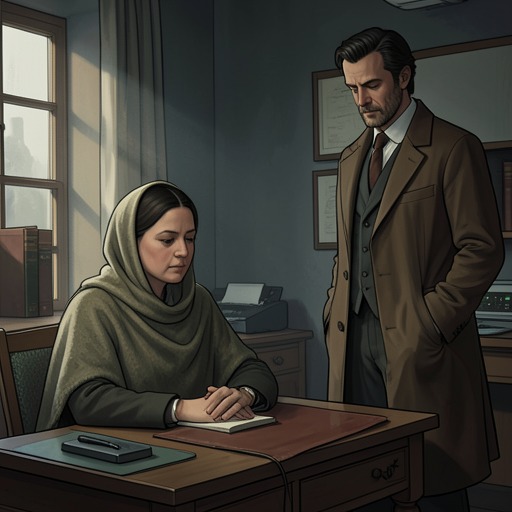
The Tenant of Wildfell HallThe Gap Between Romantic Ideals and Marital Reality describes the widening distance between the marriage Helen once hoped for and the life she experiences as Mrs. Huntingdon. Her early diary records both her love for Arthur and the first signs of disappointment: she wishes to be treated as a rational friend rather than a cherished pet, and discovers that affection, however ardent, is not the same as sympathy or moral partnership. As the marriage becomes a struggle over money, motherhood, and whether she may leave, the novel tests romantic hope against the material authority exercised within marriage.
Courtship Hopes and Early Disappointment
Helen’s account of married life appears in a diary entry dated February 18, 1822, when she is settled at Grassdale Manor and has been married for eight weeks. Looking back, she does not simply renounce her choice: she says she does not regret marrying Arthur, while acknowledging that she might never have loved him had she known him as thoroughly before the wedding as she does now. Her reflection establishes the gap as a gradual discovery rather than a sudden reversal. The person she chose in hope and the husband she is learning to know do not fully coincide.
That first disappointment is sharpened by the difference between intensity and understanding. Helen describes Arthur as very fond of her, even excessively demonstrative, but says she would prefer less caressing and more rationality. She would choose to be his friend rather than his pet, and worries that his love may lose depth where it gains ardour. The marriage therefore begins with affection but not the companionship she values: attention is present, while intellectual and emotional equality remain uncertain.
Arthur’s assurances about his past offer another instance of the distance between romantic reassurance and trust. He tells Helen that he no longer cares for the women he had previously been involved with and that he never loved any of them as much as he loves her. His words are meant to reassure her that she will not be forsaken as they were. Yet Helen’s later reflections make clear that declarations of exceptional attachment cannot by themselves supply the steadiness and sympathy she seeks. The contrast is not simply between love and its absence, but between passionate claims and the conduct that would make those claims dependable.
The Diary as a Record of Changing Judgment
The novel gives this marital disillusionment to readers through Helen’s own documentary voice. After Helen hands Gilbert Markham a thick manuscript, she asks him to read it and insists that he tell no one what it contains. Gilbert first turns through it rapidly, then settles down to read it carefully; he presents the document to Halford as a substantial record rather than an abbreviated account. Helen’s history thus arrives inside Gilbert’s letter, but its account of marriage is preserved in her diary and written from within the experience itself.
The diary’s dated entries register change over time. On the first Christmas after the wedding, Helen remembers being a bride whose heart had overflowed with happiness and hopes for the future. By the following Christmas, she says that she has little consolation in her husband, though she still loves him and believes that he loves her in his own way. The difference between those two Christmases gives the gap a clear measure: the hopes are not erased from memory, but are set against the diminished reality of a relationship with little genuine sympathy, in which many of her thoughts remain confined to herself.
Motherhood intensifies rather than resolves the contradiction. Helen is deeply concerned that Arthur’s indulgence may corrupt their son, and recognizes the temptation she herself feels to spoil an only child. Her child offers consolation in a household where she has little in her husband, but that comfort carries a new responsibility: she must consider what kind of upbringing the boy is receiving and what his father’s influence may do to him. Romantic disappointment thereby becomes a question of protection and moral duty, not only private feeling.
Money, Authority, and the Refusal to Leave
The practical conditions of marriage make Helen’s dissatisfaction more than an inward crisis. She explains that she has entrusted the care of her child to Rachel, who had nursed her and wished to nurse the boy, with a young nursery-maid working under Rachel’s direction. Trust and economy both shape the arrangement. Helen adds that, after learning about Arthur’s affairs, she has come to regard saving money as no small matter; by her own desire, nearly all the income from her fortune is committed for years to come. Her ability to act is therefore connected to resources she cannot treat as freely available for a new life.
When Helen asks Arthur whether she may take their child and what remains of her fortune and go, he refuses. She then asks whether she may at least have the child without the money; he refuses that as well, insisting that she will have neither the child nor herself apart from him. He frames the refusal in terms of the disgrace he fears if she leaves and says that he will not be made the talk of the country for what he calls her fastidiousness. Helen answers that, from then on, they will be husband and wife only in name. This exchange turns the emotional divide into an explicit conflict about movement, money, and maternal access: her desire to depart does not amount to permission to carry out a separate life with her son.
Arthur’s control is also made concrete when he discovers Helen’s papers and demands the keys to her cabinet, desk, drawers, and other possessions. Helen stands wringing her hands in anger and anguish as he postpones reading what he has found and asks for access to her locked belongings. The scene shows how little privacy her married life affords once Arthur chooses to assert himself over her effects. Her written record, her property, and her plans are all vulnerable to his scrutiny, so the private space in which she might preserve her judgment is not secure.
Separation, Secrecy, and the Limits of Romantic Hope
Helen’s eventual plan to leave is grounded in her responsibility to her son. She concludes that she must no longer submit to the circumstances at Grassdale because the boy needs to be delivered from his father’s corrupting influence. She also decides not to disclose her refuge to her relatives, so that they can truthfully deny knowledge of where she is; communications addressed to her under cover to her brother, she hopes, will still reach her. The strategy joins maternal protection to concealment: to act, Helen must arrange for others to remain ignorant of her whereabouts.
Gilbert later offers to wait until Arthur has run through his course, hoping that Helen will then marry him. Helen rejects the comfort of that prospect. She argues that it would be morally wrong to make their hopes depend on another man’s death, and that waiting would be unreasonable even if Arthur lived many more years: it could consume the prime of Gilbert’s life and leave her, in her own estimate, worn by sorrow. Her answer refuses the conventional romantic solution of replacing one marriage with a future courtship while the existing bond remains. The ideal of love must answer to conscience and to the actual duration and cost of waiting.
A final account of Lady Lowborough offers a bleak counterpoint to the romance of escape. Before Arthur’s death, Lady Lowborough elopes with another man to the Continent; after a period of dissipation, the pair quarrel and separate. She continues for a time, but as money dwindles she falls into difficulty and debt. Her story does not simply repeat Helen’s: it shows that departure and new attachment do not guarantee security or happiness. Across these contrasts, the novel treats romantic feeling as real but insufficient on its own. Helen’s experience gives the theme its decisive shape: a hoped-for marriage cannot substitute for sympathy, shared moral purpose, or the practical freedom required to protect a child.